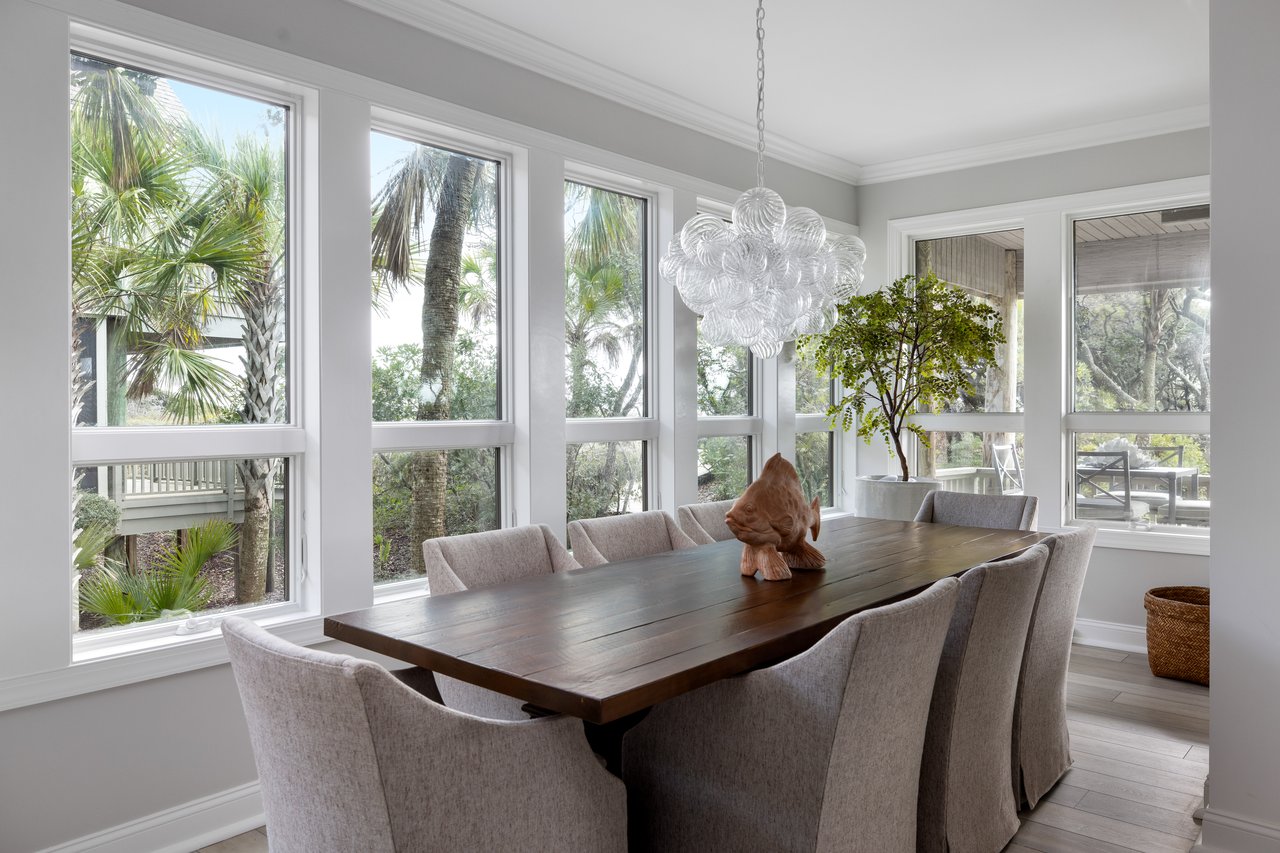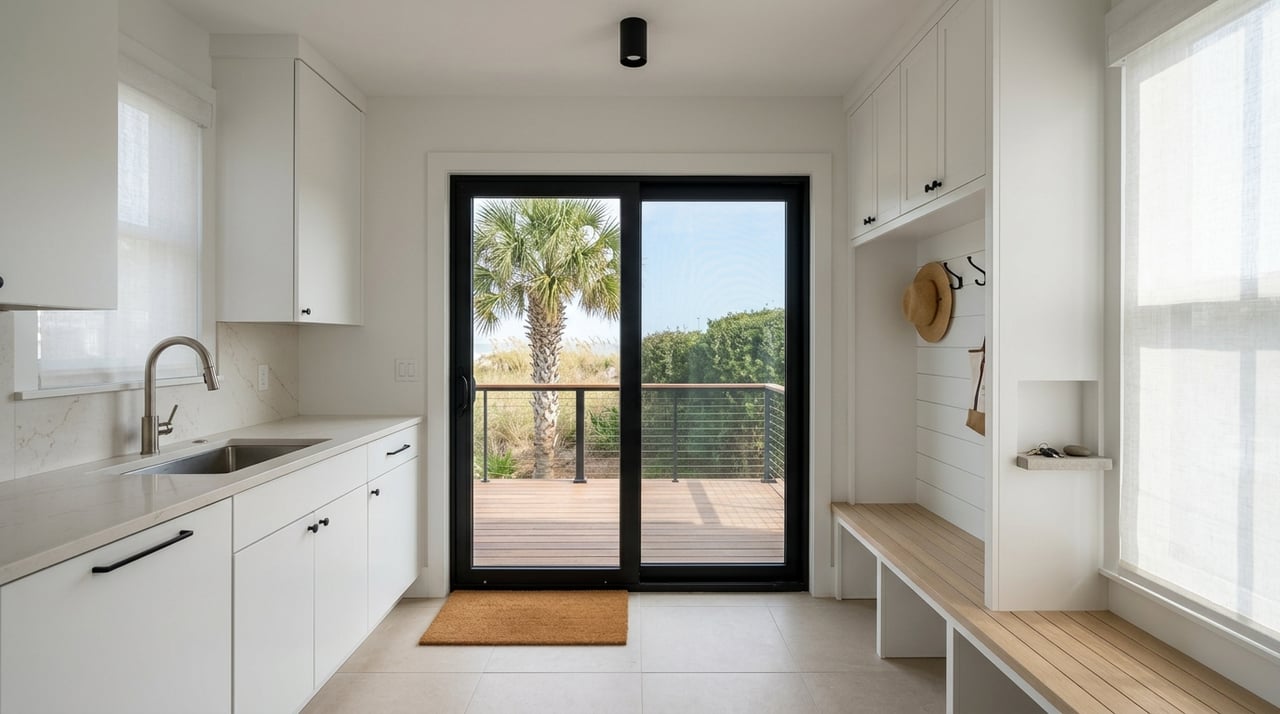
Dreaming of a Folly Beach getaway that feels effortless to own? On a barrier island, “low maintenance” is not just about fewer chores. It is about designing a home that can better handle salt air, wind, flooding, and the reality that you may not be there full-time. If you want a retreat that looks beautiful and lives easily, the smartest choices start with resilience. Let’s dive in.
Start with Folly Beach realities
Folly Beach has a humid coastal climate with hot, humid summers, mild winters, and weather shaped by warm Atlantic air. The area also faces flood risk, storm surge, heavy rain, and strong winds during tropical weather.
That matters because on Folly Beach, low-maintenance design begins with durability. The City of Folly Beach notes that flooding is a major hazard and that the entire city is in a flood hazard area. In practical terms, your home should be planned to tolerate exposure, not simply fit a coastal aesthetic.
Make resilience your design style
A truly easy-to-own beach home is usually simple, durable, and easy to reset after a storm event. That often means choosing materials and layouts that age well, clean up quickly, and require less urgent attention over time.
This is especially important if your Folly Beach property is a second home or seasonal retreat. When you are away for stretches of time, every design decision should support a lock-and-leave lifestyle.
Choose exterior materials for salt air
Salt exposure can wear down standard building materials faster than many owners expect. FEMA’s coastal construction guidance recommends corrosion-resistant hardware and connectors for oceanfront and near-ocean conditions.
For your exterior shell, that means prioritizing details like hot-dip galvanized steel or stainless steel hardware where appropriate. It also means avoiding mixed metals that can speed up corrosion. These choices may seem small during design or renovation, but they can make a meaningful difference in long-term upkeep.
Focus on the overlooked details
On beach homes, the small components often create the biggest maintenance headaches. Exposed connectors, fasteners, hangers, and hardware should be selected for coastal exposure rather than treated like standard off-the-shelf products.
If you are building new or updating an older retreat, this is one of the clearest places to invest wisely. A polished exterior matters, but the hidden materials behind that look are what help it last.
Plan the lower level carefully
Folly Beach flood standards shape how lower levels and enclosed areas beneath elevated homes should function. The city states that walls below the base flood elevation must be designed to break away from water load, and restrictions apply to obstructions below that elevation.
For homeowners, the design takeaway is straightforward. The lower level is best treated as a more sacrificial, service-oriented zone rather than the heart of everyday living. The less dependent you are on that area for essential comfort, the easier recovery can be after a storm.
Keep primary living spaces elevated
The city’s flood guidance is clear that elevation is the most effective way to protect property on Folly Beach. That makes elevated main living areas one of the smartest choices for both peace of mind and easier maintenance.
When your key spaces, storage, and valuables are higher, storm prep becomes simpler. It also supports a more practical ownership experience over time.
Protect windows and doors in advance
Openings are one of the most important parts of a beach home envelope. Folly Beach advises protecting glazed openings against high-wind damage, and FEMA says glazing in wind-borne debris regions should be impact-resistant or protected with shutters or other impact-resistant devices.
If you own a second home, built-in protection can be especially valuable. A home that already includes durable opening protection can reduce the scramble of storm preparation and make it easier to close up the property when weather is on the horizon.
Design interiors for quick cleanup
Inside the home, low maintenance does not have to mean sacrificing style. It simply means choosing a layout and furnishing plan that is easy to clear, clean, and manage when needed.
Folly Beach’s flood guidance tells owners to move valuables and furniture to higher areas of the dwelling when flooding threatens. That makes a strong case for interiors with less clutter, fewer fragile pieces, and smarter storage.
Favor finished but not fussy
The best Folly Beach retreat often feels calm, layered, and comfortable without being overly delicate. Think clean-lined furnishings, durable surfaces, and storage that helps you put things away quickly before leaving town.
If every room requires careful styling or constant upkeep, the home may photograph well but live poorly. A better goal is a space that still feels elevated while being easy to shut down and reopen.
Prioritize easy movement and storage
A lock-and-leave beach house benefits from simple circulation and fewer loose items. Built-in storage, organized owner closets, and furnishings that can be moved without much effort can all support faster storm prep and easier cleaning.
This approach also aligns with how many second-home owners actually use their properties. You want the retreat to feel welcoming on arrival, not demanding from the moment you walk in.
Keep outdoor spaces simple
Outdoor areas are part of the Folly Beach lifestyle, but they should work with the site instead of fighting it. Large, high-input landscapes can become a constant source of maintenance in a salty, windy environment.
A more practical approach is to create outdoor spaces that are compact, durable, and easy to rinse or reset. That can still feel refined, especially when the design reflects the natural setting.
Use salt-tolerant planting
Clemson Extension notes that coastal landscaping is challenging because of salt exposure and recommends selecting salt-tolerant plants to improve success. Plant choice should reflect how exposed the site is, especially near dunes and direct ocean spray.
For some Folly Beach properties, beach-compatible vegetation and salt-tolerant selections will make far more sense than traditional ornamental beds. Clemson also notes that Japanese pittosporum is well suited near the beach and is drought tolerant once established.
Respect the dune system
On oceanfront lots, local beachfront rules matter as much as appearance. Folly Beach’s beachfront management plan requires an undisturbed Dune Management Area and a minimum setback from the perpetual easement line or, where none exists, the OCRM baseline.
The same framework allows or exempts features such as beach walkovers, sand fencing, erosion-control devices, beach-compatible vegetation, and beach-compatible sand in the dune management area. In other words, dune-aware planning is not only visually appropriate. It also aligns with local rules.
Understand renovation rules before you start
If you are updating an existing Folly Beach house, permitting should be part of the early conversation. The city requires building permits for new construction, remodeling, and repairs, including both interior and exterior work on existing homes.
That includes many projects owners might assume are minor. Depending on the scope, work involving fences, pools, retaining walls, seawalls, docks, and septic tanks may also require permits.
Watch the substantial-improvement threshold
Folly Beach states that if the cost of work reaches 50 percent of the building’s assessed or appraised value, new-construction standards can be triggered. That can make a renovation more complex than expected.
If you are planning to modernize an older beach home, this is an important point to understand from the beginning. A cosmetic vision can quickly become a project with much bigger design and compliance implications.
Build your checklist around easy ownership
When you think about a low-maintenance Folly Beach retreat, it helps to evaluate every choice through one question: will this make the home easier to own in a coastal environment?
A smart checklist often includes:
- Elevated primary living spaces
- Corrosion-resistant hardware and connectors
- Protected windows and doors
- Lower levels designed with flood realities in mind
- Durable, easy-clean interiors
- Salt-tolerant, lower-input landscaping
- Site planning that respects dune and setback rules
- Early review of permits and renovation thresholds
These choices support the same end goal. Your home can feel polished and welcoming while also being realistic about Folly Beach conditions.
Why this matters for second-home buyers
For many buyers, a Folly Beach property is about freedom, not extra work. You may want a place where weekends feel easy, arrivals feel calm, and ownership does not turn into a constant maintenance list.
That is why the best beach-house design is rarely the fussiest. On Folly Beach, true luxury often looks like durability, simplicity, and thoughtful planning that helps the home perform well season after season.
If you are exploring Folly Beach as a second-home or coastal lifestyle purchase, thoughtful design decisions can protect both your enjoyment and your investment. For tailored guidance on finding a property that fits the way you want to live, connect with Mary Catherine Masi.
FAQs
What makes a Folly Beach home truly low maintenance?
- A low-maintenance Folly Beach home is designed for salt air, flooding, wind, and part-time occupancy, with durable materials, protected openings, elevated living areas, and simpler interiors and landscaping.
What exterior materials hold up best near Folly Beach?
- FEMA’s coastal guidance recommends corrosion-resistant hardware such as hot-dip galvanized steel or stainless steel for coastal exposure, while also avoiding mixed metals that can accelerate corrosion.
What should you know about lower levels in Folly Beach homes?
- Folly Beach flood standards restrict certain obstructions below the base flood elevation and require walls below that level to break away from water load, so lower levels are best planned as less essential spaces.
What landscaping works best for a Folly Beach retreat?
- Salt-tolerant plants and beach-compatible vegetation tend to be better suited to Folly Beach conditions than high-input ornamental planting, especially on more exposed sites.
What permits are required for Folly Beach renovations?
- Folly Beach requires permits for new construction, remodeling, and repairs, including interior and exterior work on existing homes, along with many site-related improvements such as fences, pools, docks, and retaining walls.
What is the substantial-improvement rule in Folly Beach?
- The city states that if renovation costs reach 50 percent of a building’s assessed or appraised value, the project may trigger new-construction standards.