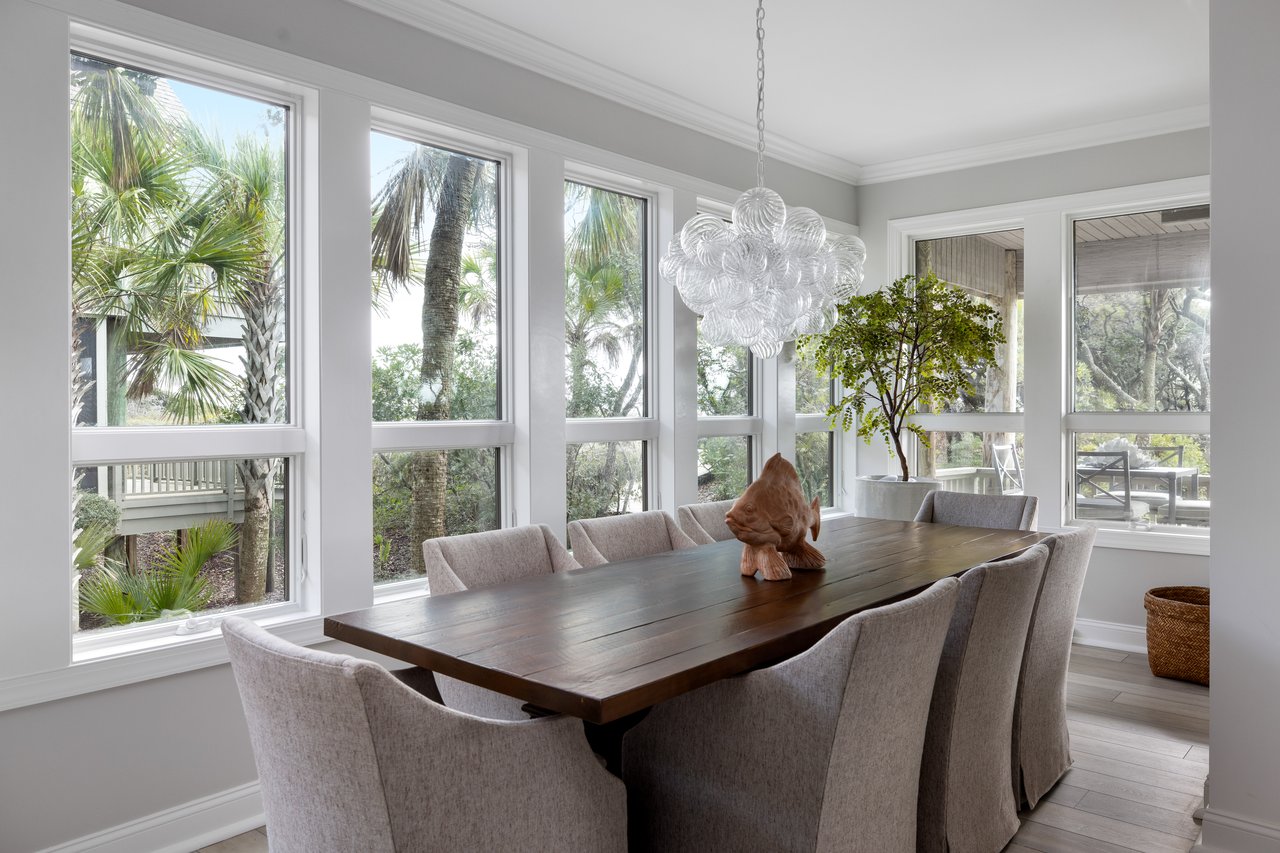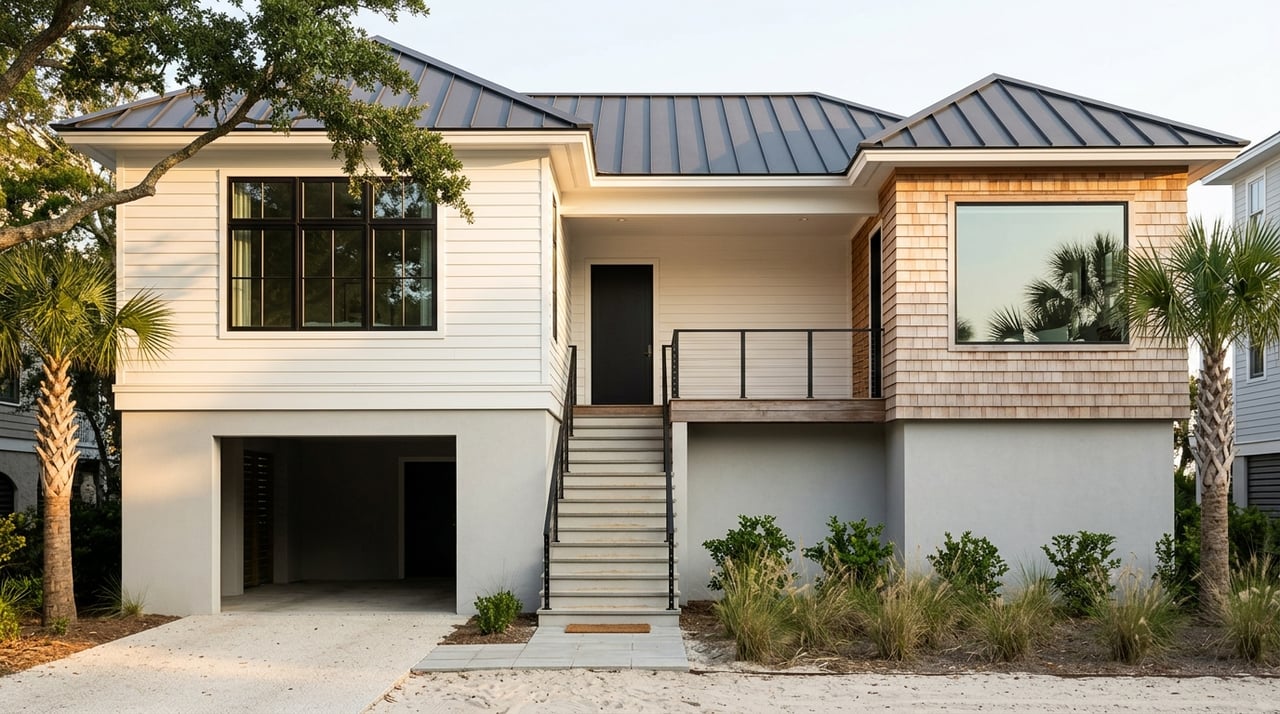
If you are eyeing a second home on Folly Beach, the cottage-versus-condo decision is not just about charm, views, or square footage. On this barrier island, flood rules, insurance, rental licensing, and day-to-day upkeep can shape your ownership experience just as much as the home itself. The good news is that when you understand how Folly works, you can choose the property type that better fits your lifestyle, budget, and long-term plans. Let’s dive in.
Why Folly Beach Is Different
Folly Beach is about 10 miles from downtown Charleston, but it operates very differently from an inland second-home market. It is a public barrier-island beach town with beach access at the end of every block on Ashley Avenue, plus a major fishing pier that anchors the commercial district.
It is also a coastal environment with real long-term planning concerns around flooding. Folly’s planning update says sea level is expected to rise at least 1.6 feet by 2050. That makes flood exposure, insurance, and construction standards central to your buying decision, whether you prefer a detached cottage or a condo.
Location within Folly matters too. The official visitor guide notes that Center Street Beach is the busiest area in summer, while the west end near Folly Beach County Park feels more untouched. So in many cases, you are not only comparing cottages and condos. You are also comparing micro-locations with very different day-to-day experiences.
Cottages Offer More Control
A Folly Beach cottage often appeals to buyers who want a more traditional beach-house feel. You typically get more direct control over the property, more privacy, and in some cases more outdoor space to enjoy when you are in town.
That control comes with more responsibility. On Folly Beach, owners are directly responsible for repairs, improvements, and code compliance on detached homes. The city requires permits for permanent work such as re-roofing, siding, additions, alterations, and site work, even if you plan to do the work yourself.
Flood compliance can add another layer. The city says flood maps are used to determine elevation and insurance requirements, and it enforces V-zone construction standards throughout the city, even in A zones. If a cottage is in or near a flood-prone area, you may need to account for elevated construction features, elevated HVAC placement, and other requirements that can affect both renovation plans and future costs.
Condos Shift More Upkeep to the Association
A condo often fits the buyer who wants a more managed, lock-and-leave ownership experience. If your goal is to arrive, enjoy the beach, and leave without coordinating every exterior repair, a condo can feel simpler.
Under South Carolina law, condominium ownership includes your individual unit plus a shared interest in the building’s common elements. Common elements can include features like the roof, foundation, walkways, and stairways. The condominium bylaws must address care and upkeep, and co-owners contribute proportionally to maintenance and repair costs.
In practical terms, that usually means less direct exterior responsibility for you as an owner. It also means monthly or periodic association dues, shared decision-making, and rules that may affect how the building is maintained and how units can be used.
The Real Tradeoff: Independence vs Convenience
For many second-home buyers, this is the heart of the decision. A cottage usually offers more independence, while a condo usually offers more structure.
If you like making your own decisions about improvements, timelines, and property use, a cottage may feel more natural. If you prefer a more turnkey setup where exterior maintenance is handled through the association, a condo may better match your goals.
Neither option is automatically better on Folly Beach. The stronger fit depends on how hands-on you want to be, how often you plan to visit, and how comfortable you are with either solo responsibility or association oversight.
Insurance Looks Different for Each
Insurance is another area where cottages and condos diverge quickly. On Folly Beach, that matters because the city is clear that standard homeowner policies do not cover flood damage.
For a detached cottage, you are generally looking at a more traditional homeowners insurance setup, plus separate flood coverage if the property faces coastal flood risk. Since flood zone and elevation affect insurance requirements, this should be part of your review early in the process.
For a condo, coverage is usually split between the association’s master policy and your individual unit-owner policy. The master policy is often funded through dues and generally covers common areas and parts of the building structure. That setup can simplify some things, but it also means you need to understand exactly what the master policy covers and where your own responsibility begins.
Rental Rules Can Change the Math
If you hope to offset costs with rental income, this may be the most important part of your decision. On Folly Beach, short-term rental rules are highly specific, and they do not apply the same way to every property.
The city says any business activity in city limits requires a Folly Beach business license. Short-term rental owners must also handle city registration and taxes, and both owner-occupied and investor short-term rental license holders must pay sales and accommodations taxes. Charleston County also shows a 2 percent county accommodations tax for the City of Folly Beach.
The larger issue is licensing. Folly Beach makes a sharp distinction between owner-occupied short-term rentals and investor short-term rentals, and the difference matters for second-home buyers.
Why Second-Home Buyers Need to Look Closely
Owner-occupied short-term rentals are tied to the 4 percent property-tax rate and are limited to 72 rental days per year. Investor short-term rentals are tied to the 6 percent property-tax rate and do not have a nightly cap.
For many second-home buyers, the owner-occupied path may not apply. The South Carolina Department of Revenue describes legal residence as the owner’s primary, owner-occupied home, and says homes kept for vacation or recreational use are not legal residence. So unless the Folly property becomes your true primary home, you may not qualify for the owner-occupied category.
That is why rental assumptions can get expensive very quickly. A property that looks ideal as a second home may not support the rental strategy you had in mind.
Licensing Is Property Specific
On Folly Beach, rental status is not something you can assume transfers with the sale. The city says no rental license is transferable to a new owner.
It also says new investor licenses are available only in narrow heir or medical-hardship situations, the investor waitlist is not yet open, and no new investor licenses are projected for the next business license year. If a property is sold with rentals already on the books, a provisional license may be available during the transition period.
That makes due diligence critical. If rental income is part of your buying plan, you need to verify the property’s current licensing status, what may happen after closing, and whether the parcel is even eligible.
Zoning Matters More Than Many Buyers Expect
Parcel-level zoning can affect whether a property can be used as a short-term rental at all. The city says properties in the Marsh Island and Conservation zoning district are not currently eligible for any short-term rental license, and the parcel’s zoning map controls land-use decisions.
This is one reason two properties can appear equally appealing online while offering very different ownership outcomes. A charming cottage and a convenient condo may look comparable at first glance, but their zoning and licensing options can point you in two completely different directions.
How to Decide Which Fits You
If you are deciding between a cottage and condo on Folly Beach, start with three questions before you schedule tours.
1. How much maintenance do you want?
A cottage usually gives you more freedom, but it also places more upkeep, compliance, and repair coordination on your shoulders. A condo can reduce that burden, but you trade some control for shared governance and dues.
2. What is your rental plan?
If you want to rent the property, verify whether that is actually possible for that address and ownership structure. On Folly Beach, current short-term rental rules, non-transferable licenses, and zoning restrictions can make one property workable and another one unusable for the same goal.
3. How important is flood exposure?
The city says A and V zones have elevation and flood-insurance implications, and V zones have the strictest standards. This affects cottages and condos alike, but it can shape insurance costs, building requirements, and future improvement plans.
A Simple Way to Frame It
If you want a stand-alone beach-house feel and are comfortable managing more moving parts, a cottage may be the better fit. If you want a more lock-and-leave ownership style with exterior upkeep handled through an association, a condo may be the better fit.
On Folly Beach, though, the best choice is rarely about property type alone. It is about how that property type intersects with flood exposure, insurance structure, zoning, and rental licensing.
That is where local guidance matters. For out-of-market buyers especially, Folly can look straightforward from a distance but feel very different once you dig into the details.
If you want help comparing ownership options and narrowing in on the right fit for your coastal goals, Mary Catherine Masi can help you approach Folly Beach with the clarity and concierge-level guidance that second-home buying deserves.
FAQs
What is the main difference between a Folly Beach cottage and condo for second-home buyers?
- A cottage usually offers more control and a more independent beach-house feel, while a condo usually offers a more managed ownership experience with shared upkeep through an association.
Are flood rules important for both cottages and condos on Folly Beach?
- Yes. The city uses flood maps to determine elevation and insurance requirements, and flood exposure should be reviewed for either property type before you buy.
Can a second-home buyer use a Folly Beach property as a short-term rental?
- Possibly, but you need to verify the specific property’s zoning, licensing status, and eligibility because Folly Beach short-term rental rules are highly property specific.
Do Folly Beach short-term rental licenses transfer to a new owner?
- No. The city says short-term rental licenses are not transferable, which is a major point to confirm if rental income is part of your plan.
Is condo ownership on Folly Beach easier to maintain than a cottage?
- In many cases, yes. Condo ownership typically shifts more exterior maintenance responsibility to the association, but you will still need to review dues, bylaws, and any use restrictions.
Why does zoning matter when buying a second home on Folly Beach?
- Zoning can affect whether a property is eligible for short-term rental licensing, so it can directly shape how you use the home and what income options may be available.